EIFS & Stucco Pricing Guide · Ontario
Ontario stucco pricing is often reduced to a single square-foot number. That number is useful for early budgeting and dangerously incomplete for hiring a contractor. This guide explains realistic planning ranges, what actually changes EIFS pricing, why repairs can cost more than new work, and how to compare proposals without accidentally comparing a full wall system with a finish coat.

What is a realistic EIFS or stucco price per square foot in Ontario?
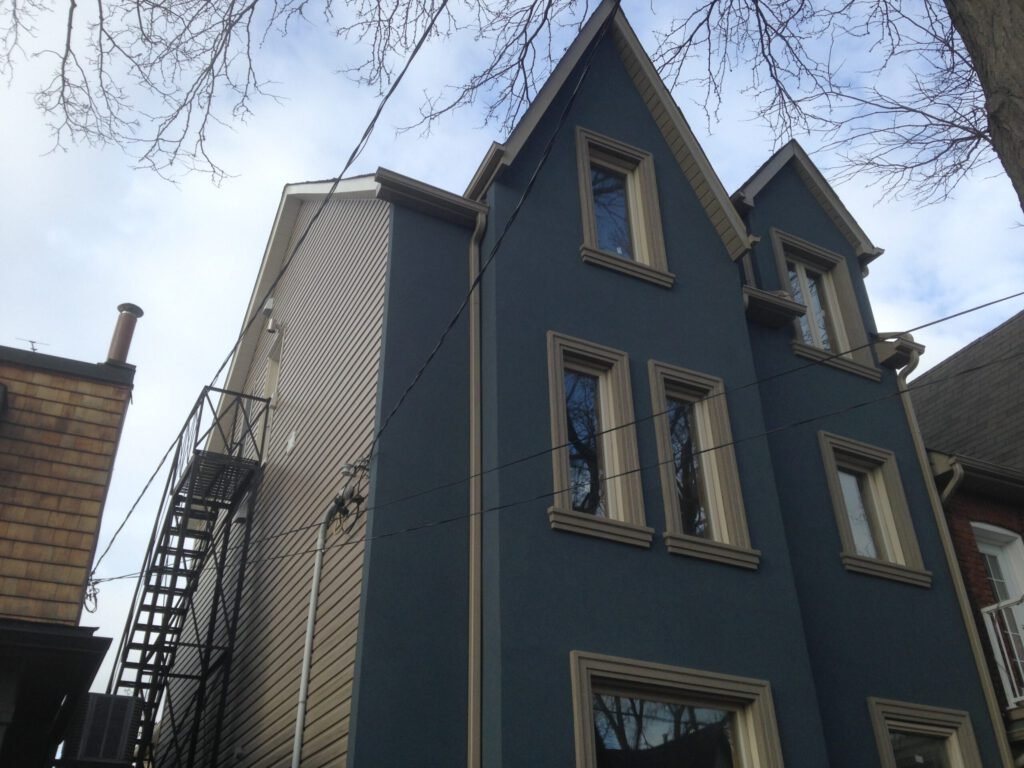
For preliminary 2026 planning, straightforward installed EIFS or acrylic stucco work in Ontario may begin around the low teens per square foot. Detailed residential and commercial projects commonly move into the high teens or twenties, while complex restoration, difficult access, premium finishes and major substrate work can exceed that range.
These are planning ranges, not a universal rate card. A contractor cannot responsibly price a three-storey occupied renovation, a small residential accent wall and a large new commercial elevation as though geometry, access and moisture damage have agreed to stop existing.
For a broader explanation of system performance, drainage and quality, read our complete Ontario EIFS guide.
Why online stucco prices vary so much
Many published prices describe different scopes while using the same word. One may include insulation, drainage, mesh, base coat and finish. Another may describe coating over an existing prepared surface. A third may exclude scaffold, trims, sealants and substrate repairs. All three can be called “stucco installation,” which is efficient if the goal is confusion.
EIFS is a multi-component exterior cladding assembly. Canadian code material and CCMC evaluations describe systems containing a water-resistive barrier, attachment, insulation and reinforced coating layers. A credible proposal should therefore identify more than a texture and colour.

The nine biggest EIFS cost drivers
1. New construction versus renovation
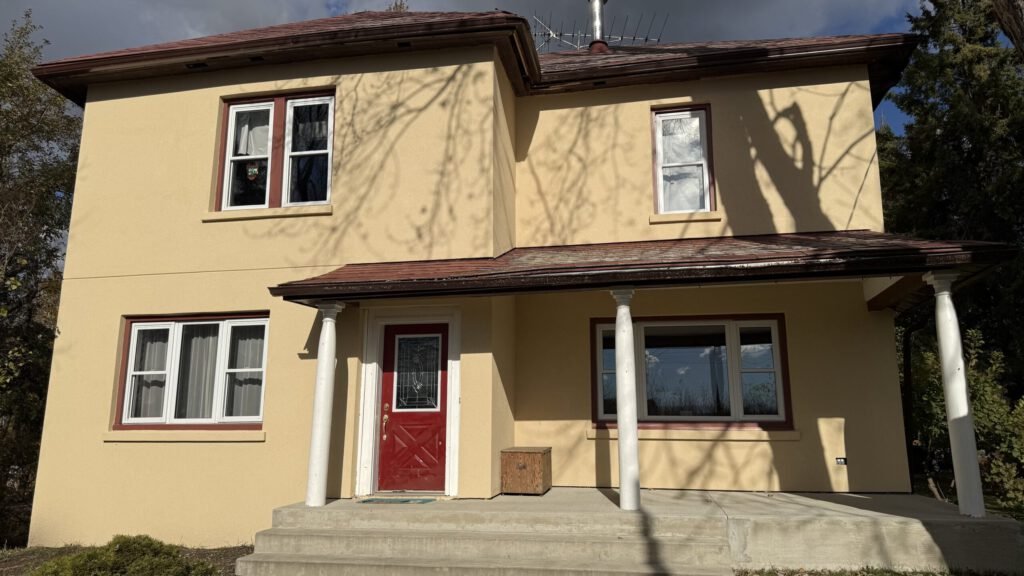
New walls usually provide clearer substrates, easier sequencing and fewer unknowns. Renovations may require removal, temporary protection, moisture investigation and coordination with existing openings, roofs and landscaping.
2. Existing substrate condition
Loose coatings, deteriorated sheathing, wet insulation or damaged framing cannot be priced accurately from the visible square footage alone. An allowance may be appropriate until selective openings confirm conditions.
3. Height and access
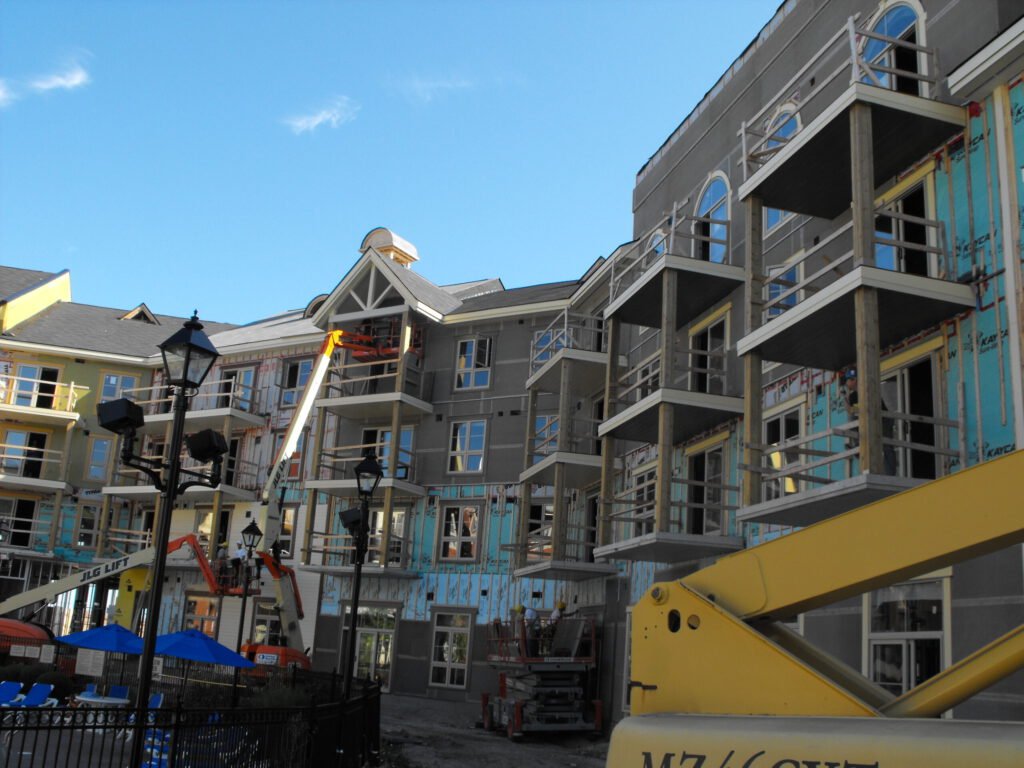
Scaffold, lifts, swing stages, cranes and overhead protection add setup, inspection and dismantling time. Small high-level repairs can have a high unit cost because access may take longer than the visible patch.
4. Insulation thickness and system selection
Insulation thickness changes material volume, edge details and transitions. Different manufacturers and systems also have different components, approvals and installation requirements.
5. Openings, flashings and penetrations
Windows, doors, vents, pipes, decks and roof connections require detailed labour that is poorly represented by wall area. A building with many openings can have substantially more work than a blank elevation of the same size.
6. Mouldings, bands and reveals
Architectural profiles require layout, cutting, reinforcing and finishing. Deep grooves and complex shapes may also need project-specific detailing to avoid weak edges and water traps.
7. Finish texture and colour
Standard textured finishes are generally more forgiving than fine or smooth finishes. Dark colours, multiple colour changes and large uninterrupted surfaces can require additional planning and labour.
8. Site protection and phasing
Occupied entrances, neighbouring properties, vehicles, landscaping and public areas require protection and controlled sequencing. Commercial work may include after-hours access or limited shutdown windows.
9. Winter conditions
Cold-weather work may require enclosure, heat, monitoring and additional curing time. Applying water-based materials outside their approved conditions is not a clever discount. It is a warranty dispute waiting for stationery.
Why stucco and EIFS repairs can cost more per square foot than new work
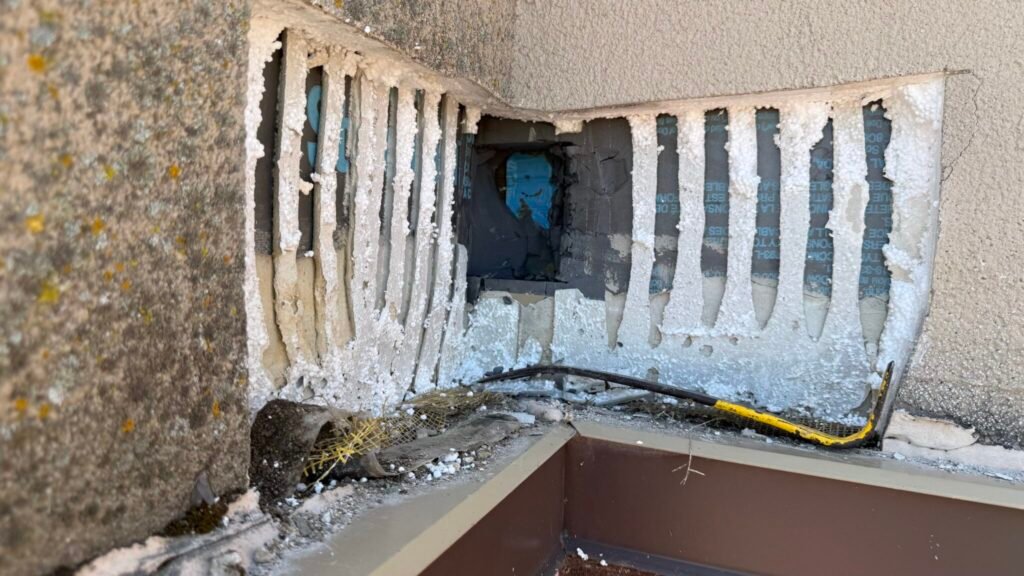
Repairs concentrate many fixed costs into a small area: mobilization, access, protection, cutting clean boundaries, matching texture and colour, and investigating why the damage happened. Repairing the visible finish without correcting the moisture or movement source can leave the owner paying twice.
Cosmetic or lamina repairs
Small impact damage limited to the reinforced coating layer may be repaired locally with compatible system materials. Texture and colour matching can still make the final appearance challenging.
Insulation and drainage repairs
When damage extends through the base coat and insulation, the repair must restore continuity of the drainage path, mesh, base coat and finish. That is more involved than filling a crack.
Substrate or structural repairs
Wet sheathing, corrosion, rot or failed framing requires removal beyond the visible defect. The exterior finish is then rebuilt after the underlying wall is made sound.
Find the cause before pricing the finish
Staining, recurring cracks, soft areas and failed sealants may indicate a broader building-envelope issue. Our exterior restoration team can investigate the assembly before a cosmetic repair hides useful evidence.
How to compare stucco quotes properly
Ask every bidder to define the same scope. A useful comparison should identify:
- Manufacturer and exact EIFS or stucco system.
- Water-resistive barrier and drainage method.
- Insulation type, thickness and attachment.
- Reinforcing mesh type and high-impact areas.
- Base coat, primer and finish.
- Opening, flashing and termination details.
- Sealants, backer rod and joint preparation.
- Removal, disposal and substrate-repair allowances.
- Scaffold, lifts, protection and winter conditions.
- Warranty terms, exclusions and maintenance requirements.
A lower total may represent better efficiency. It may also exclude the work that protects the building. The only way to know is to compare written scope rather than admiring the final number in isolation.
Should you choose EIFS based on price alone?
No. Cost matters, but so do drainage, energy performance, architecture, impact exposure and long-term maintenance. The correct system is the one that suits the wall and is installed in accordance with manufacturer details and applicable requirements.
System 6 provides EIFS and stucco installation and repair across Ontario. For meaningful pricing, request a project review with drawings, photographs or a site assessment.
Frequently asked questions
Ontario stucco pricing FAQs
Is EIFS cheaper than brick?
EIFS may have a lower installed cost and structural weight than full masonry on some projects, but pricing depends on design, access, insulation, details and substrate. Compare complete wall assemblies rather than finish materials alone.
Why are small stucco repairs expensive?
Small repairs still require mobilization, access, protection, investigation, clean cutting, reinforcement and texture matching. Those fixed tasks are spread across very little area.
Can a contractor quote EIFS from square footage alone?
Square footage can support early budgeting, but a final proposal should account for openings, access, system details, repairs, mouldings, sealants and site conditions.
Does thicker EIFS insulation cost more?
Usually. It increases material volume and can change transitions, trims and attachment requirements. It may also improve thermal performance, depending on the full wall design.
Is the lowest stucco quote risky?
Not automatically. It becomes risky when the proposal does not identify the system, drainage, reinforcement, details, access and exclusions clearly enough to compare.