EIFS & Stucco Comparison · Ontario
EIFS and traditional cement stucco are often grouped together because both can produce a seamless textured exterior. Beneath the finish, however, they are different systems with different insulation, weight, drainage, impact and cracking characteristics. This comparison explains where each performs well and how to choose for an Ontario building.
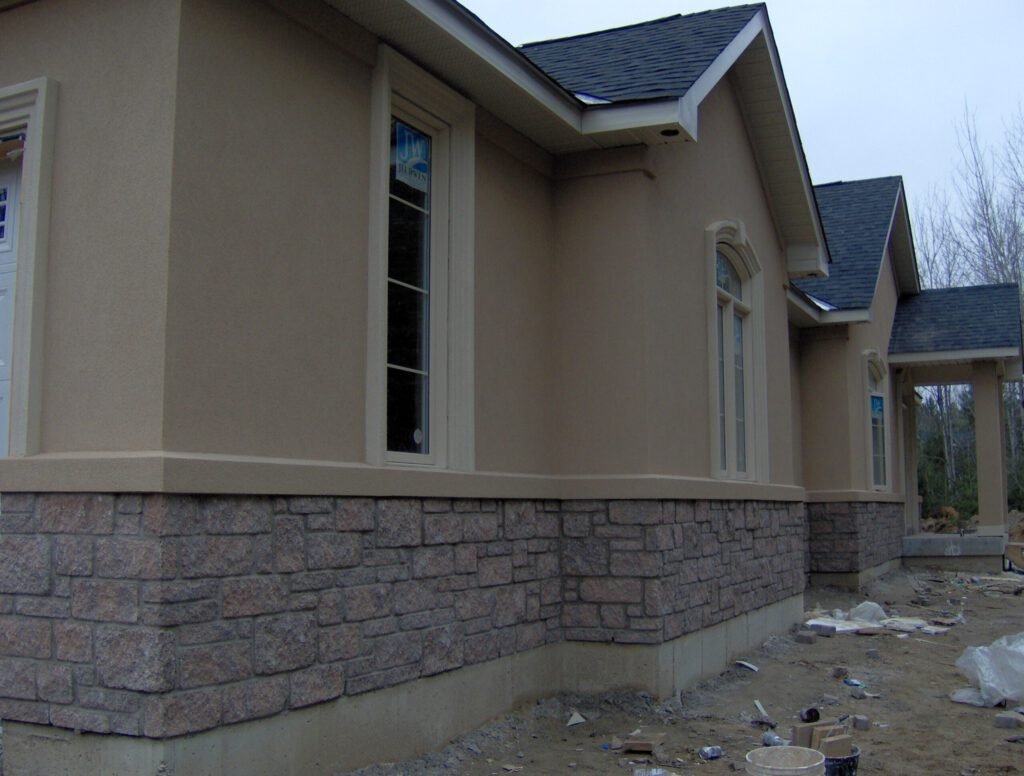
EIFS and traditional stucco are not interchangeable
EIFS is an exterior insulation and finish system. A modern drainage EIFS generally includes a water-resistive barrier, drainage path, insulation board, reinforcing mesh, base coat and finish.
Traditional stucco is a cement-based plaster cladding commonly installed over lath and a drainage layer. It is heavier, does not inherently include continuous exterior insulation, and has different movement and crack behaviour.
Canadian code guidance specifically distinguishes modern rainscreen or drainage EIFS from older face-sealed systems. The drainage path is not a cosmetic upgrade. It is part of the wall’s moisture-management strategy.
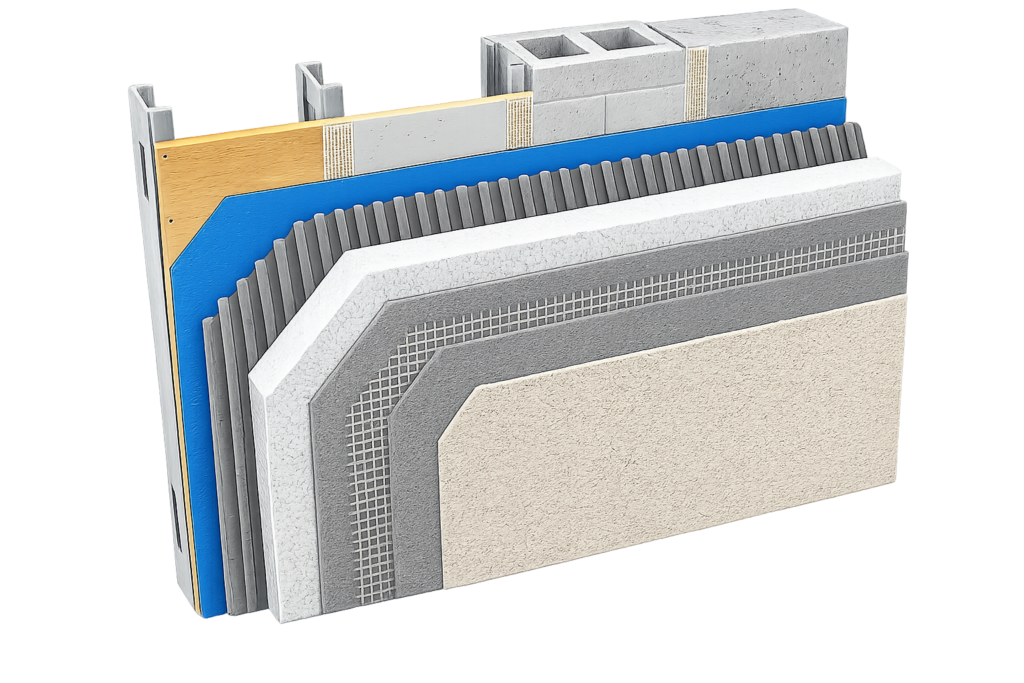
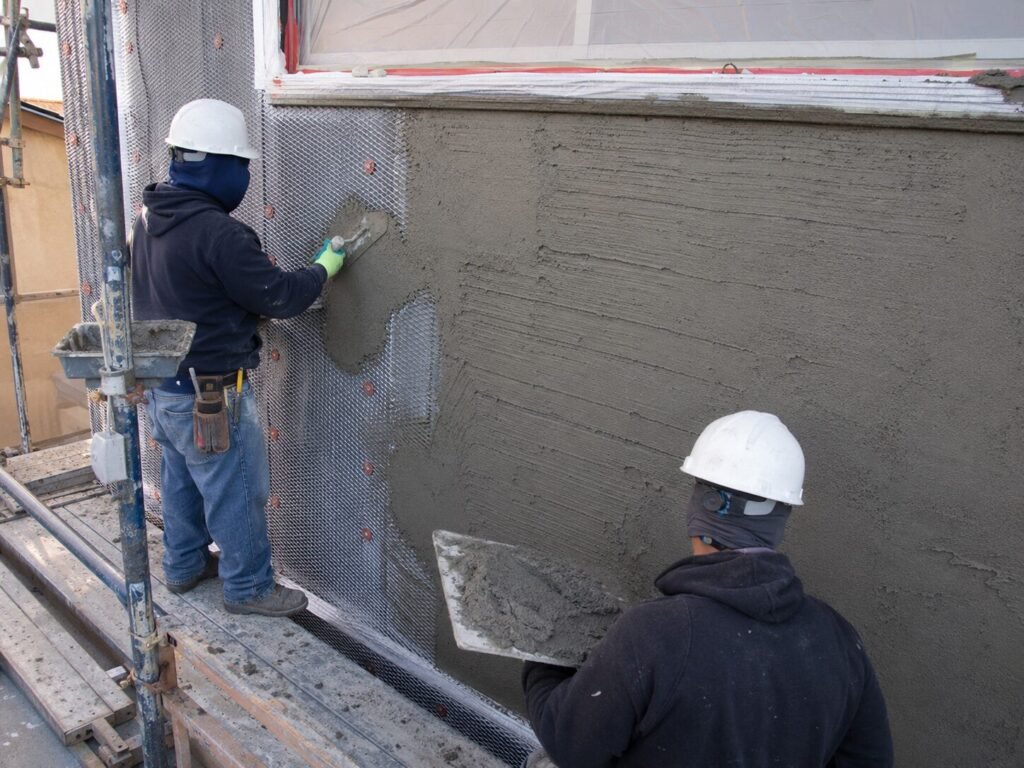
Quick comparison
EIFS
- Continuous exterior insulation
- Lightweight system
- Highly flexible architectural shapes
- Acrylic finish options
- Modern systems include drainage
- Needs impact-aware design and compatible repairs
Traditional cement stucco
- Heavier cement-based cladding
- Insulation must be designed separately
- Traditional solid appearance
- Drainage and lath behind cladding
- More brittle and prone to movement cracking
- Repairs require attention to lath and coat compatibility
Which system provides better insulation?
EIFS has the clear advantage when continuous exterior insulation is a project goal. The insulation sits outside the framing, helping reduce thermal bridging through studs and floor edges. Actual energy performance depends on insulation thickness, airtightness, wall design and transitions.
Traditional stucco can be installed on an energy-efficient wall, but the stucco itself is not the insulation layer. Continuous insulation must be added separately if required by the design.
For more detail, see our Ontario EIFS cost and performance guide.
Which handles Ontario rain and snow better?
Either can perform well when the wall includes effective drainage, flashings and a second plane of protection. Either can fail when water enters at openings or transitions and cannot drain.
Modern drainage EIFS is specifically designed to provide a route for incidental moisture behind the insulation. Traditional stucco assemblies also rely on drainage behind the plaster. The correct answer is therefore not “cement always breathes” or “EIFS is waterproof.” Building-envelope performance comes from the complete assembly.
Which system cracks more?
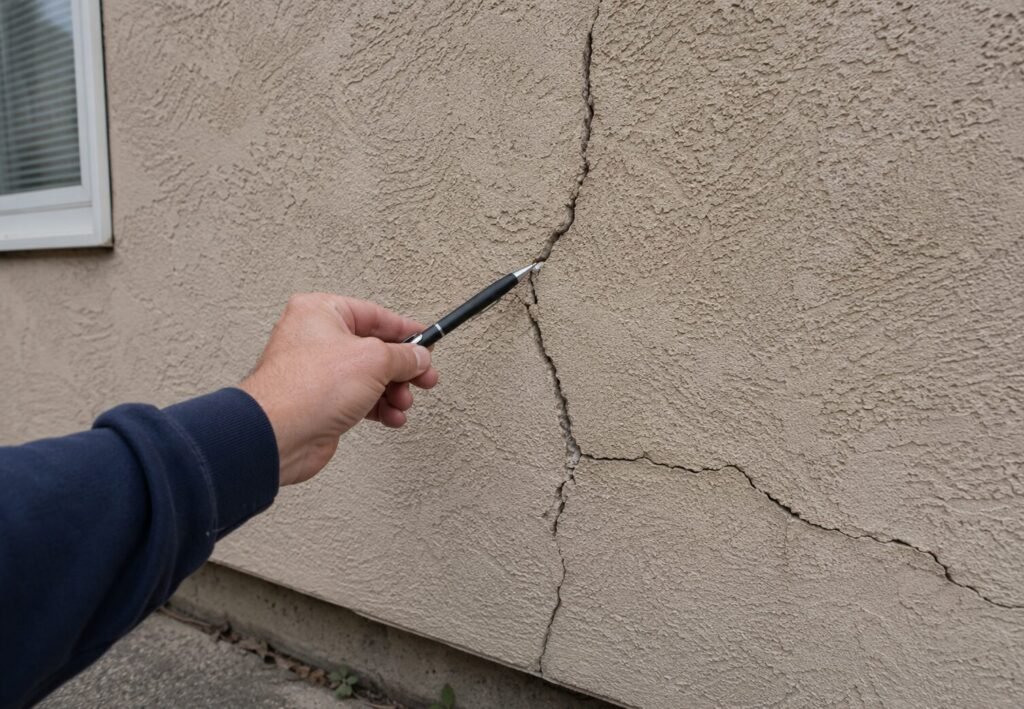
Traditional cement stucco is rigid and can crack from shrinkage, building movement, impact and thermal stress. Control joints, substrate design, lath and curing influence performance.
EIFS uses a polymer-modified reinforced coating over insulation and can accommodate some movement differently, but it is not crack-proof. Missing mesh overlaps, weak details, substrate movement or failed joints can still produce cracks.
A crack is a symptom, not a diagnosis
Before repairing either system, determine whether the cause is shrinkage, impact, movement, corrosion, moisture, failed sealant or substrate damage.
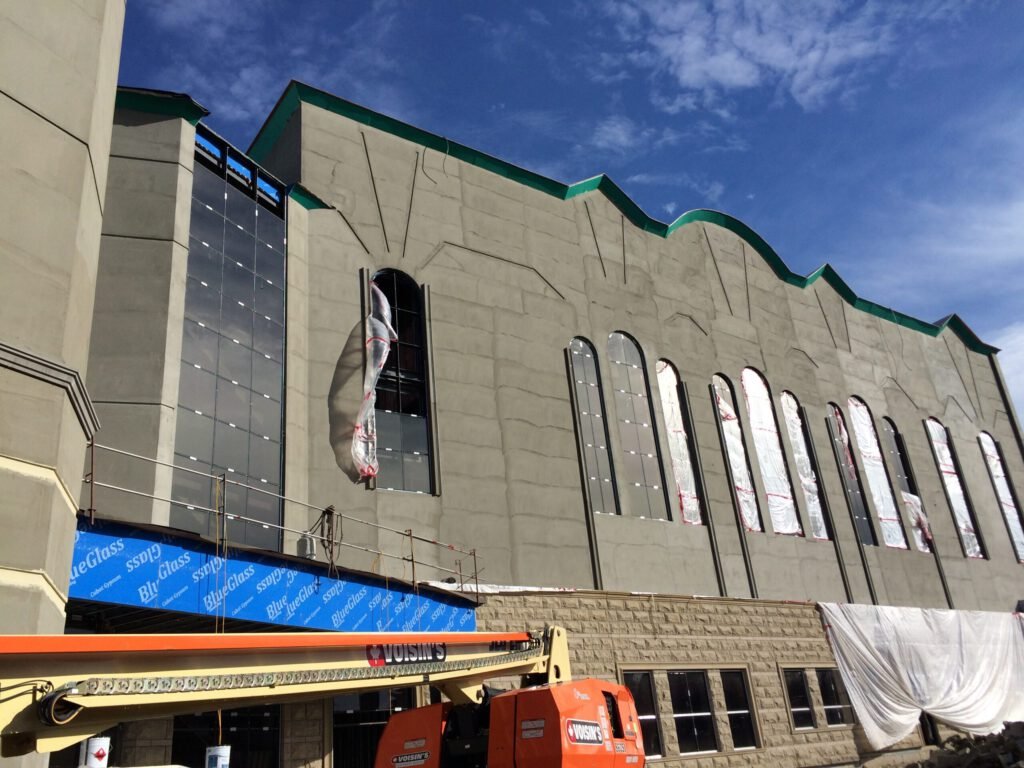
Which is more impact resistant?
Traditional stucco has a hard cement surface but can chip or crack under concentrated impact. Standard EIFS has a softer insulated backing and may be more vulnerable in high-traffic areas unless heavier reinforcing mesh or protective design is used.
Schools, loading areas, walkways and ground-level commercial façades often deserve enhanced impact reinforcement regardless of the finish selected.
Which gives more design flexibility?
EIFS is particularly effective for bands, cornices, deep reveals, curved features and lightweight architectural shapes. Traditional stucco can also create attractive details, but heavy projections and complex profiles require different support and construction.
Which costs more?
There is no universal winner. EIFS includes insulation and may simplify some architectural shapes. Traditional stucco may have lower material costs in some assemblies but can require separate insulation or heavier support. Renovation conditions, height, substrate work and details often influence the final price more than the category name.
See our detailed Ontario stucco cost guide for pricing factors and proposal comparisons.
Which is easier to repair?
Both systems are repairable, but correct materials and boundaries matter. EIFS repairs may need to restore insulation, drainage, mesh, base coat and finish. Traditional stucco repairs may involve lath, scratch and brown coats, finish matching and control-joint considerations.
Colour and texture matching can be difficult in both systems. A technically sound patch may remain visible, particularly on large sunlit walls.
Which should you choose?
- Choose EIFS when continuous insulation, low weight and architectural flexibility are priorities.
- Choose traditional stucco when a cement-based cladding and traditional construction are preferred.
- Choose neither based only on a sample texture. Review the complete wall, drainage, energy target and exposure.
System 6 installs and repairs both EIFS and stucco systems. A project review can identify which assembly fits the building rather than forcing every wall into the contractor’s favourite product.
Frequently asked questions
EIFS versus stucco FAQs
Is EIFS the same as synthetic stucco?
“Synthetic stucco” is a common informal name for EIFS, but EIFS is a complete insulation and finish assembly rather than only a synthetic coating.
Is traditional stucco more durable than EIFS?
Durability depends on exposure, detailing, impact risk and maintenance. Traditional stucco is harder but more brittle; EIFS can be reinforced for impact and offers continuous insulation.
Does EIFS trap moisture?
Older face-sealed systems were vulnerable when water entered. Modern drainage EIFS includes a route for incidental water to escape when properly installed.
Which system is better for a cold climate?
EIFS offers continuous exterior insulation, while either cladding can manage weather when designed with drainage, flashings and compatible materials.
Can EIFS look like traditional stucco?
Yes. Texture and colour can be similar, although the underlying construction and performance characteristics remain different.
Contact System 6 to compare systems for a new façade, renovation or repair project.