EIFS & Stucco Repair Guide · Ontario
A crack in stucco may be a harmless surface defect, evidence of building movement, an impact wound or a route for water into the wall. Ontario’s temperature swings, rain, snow and freeze-thaw cycles can expose weak details, but weather is rarely the only explanation. The crack pattern and surrounding conditions matter.
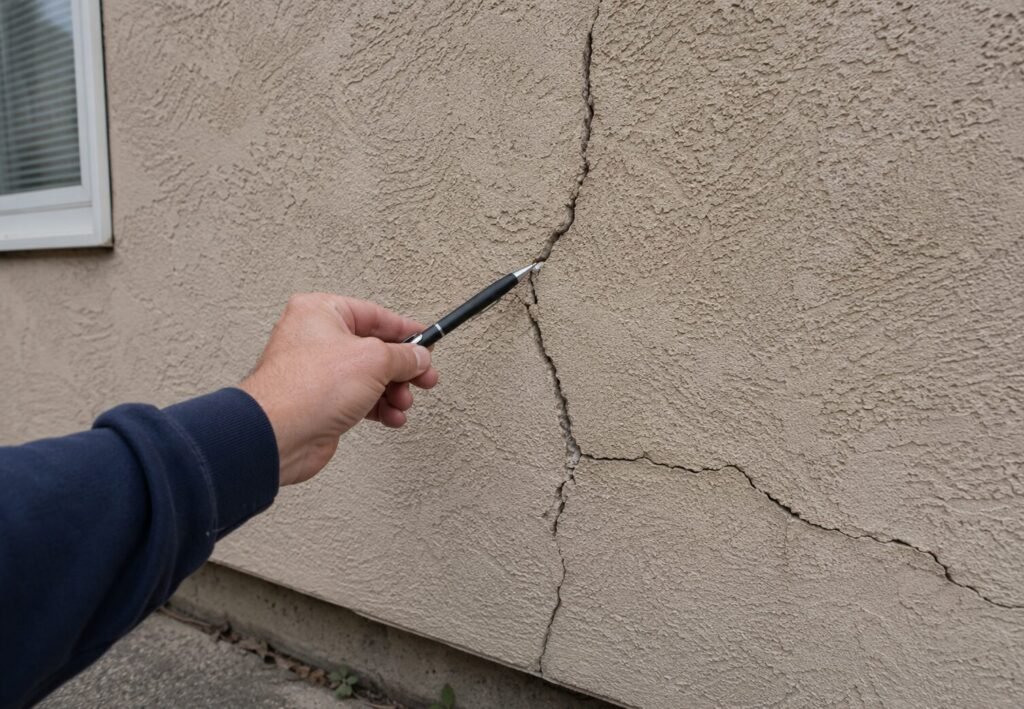
Does all stucco crack?
Traditional cement stucco is rigid and can develop small shrinkage or movement cracks. EIFS uses reinforced polymer-modified coatings and behaves differently, but it can still crack from impact, substrate movement, weak reinforcement, failed joints or incorrect details.
Not every crack means the wall is failing. Not every small crack is harmless either. A narrow opening beside a failed window joint can admit more water than a wider dry crack in a protected location.
The most common reasons stucco cracks in Ontario
1. Drying shrinkage and curing
Cement-based stucco loses moisture as it cures and can shrink. Mix design, coat thickness, curing conditions and control-joint layout influence whether that movement produces visible cracks.
2. Building and substrate movement
Wood framing, concrete, steel and sheathing expand, contract, settle and deflect at different rates. Cracks often appear where materials change, floors meet, additions connect or openings concentrate stress.
3. Freeze-thaw exposure
Water expands when it freezes. If moisture enters a crack, porous material or failed transition and remains trapped, repeated freezing and thawing can enlarge defects and weaken surrounding material.
4. Thermal movement
Dark façades and south- or west-facing walls can experience large surface-temperature changes. Long uninterrupted walls, missing joints or poorly coordinated materials may concentrate movement.
5. Failed sealants and flashings
Cracks near windows, doors, decks and roof intersections may be connected to failed joints or drainage details. Patching the finish without restoring the water-management transition leaves the cause untouched.
6. Impact damage
Ladders, vehicles, carts, snow-removal equipment and vandalism can puncture EIFS or chip cement stucco. Small impacts may break reinforcement beneath an apparently modest surface mark.
7. Installation defects
Insufficient mesh overlap, thin base coat, misaligned insulation boards, incompatible materials, missing control joints or application outside approved weather conditions can all contribute.
What different crack patterns can suggest
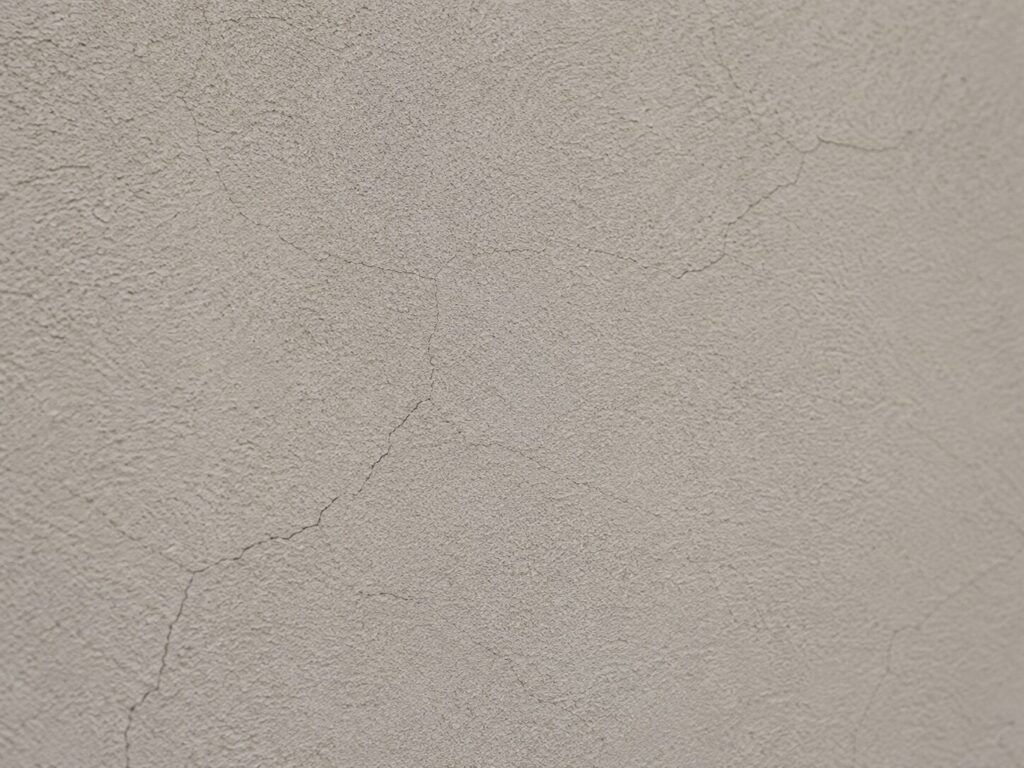
Hairline surface cracks
Fine random cracks may relate to finish shrinkage or curing. Track whether they widen, recur after repair, hold moisture or appear with staining.
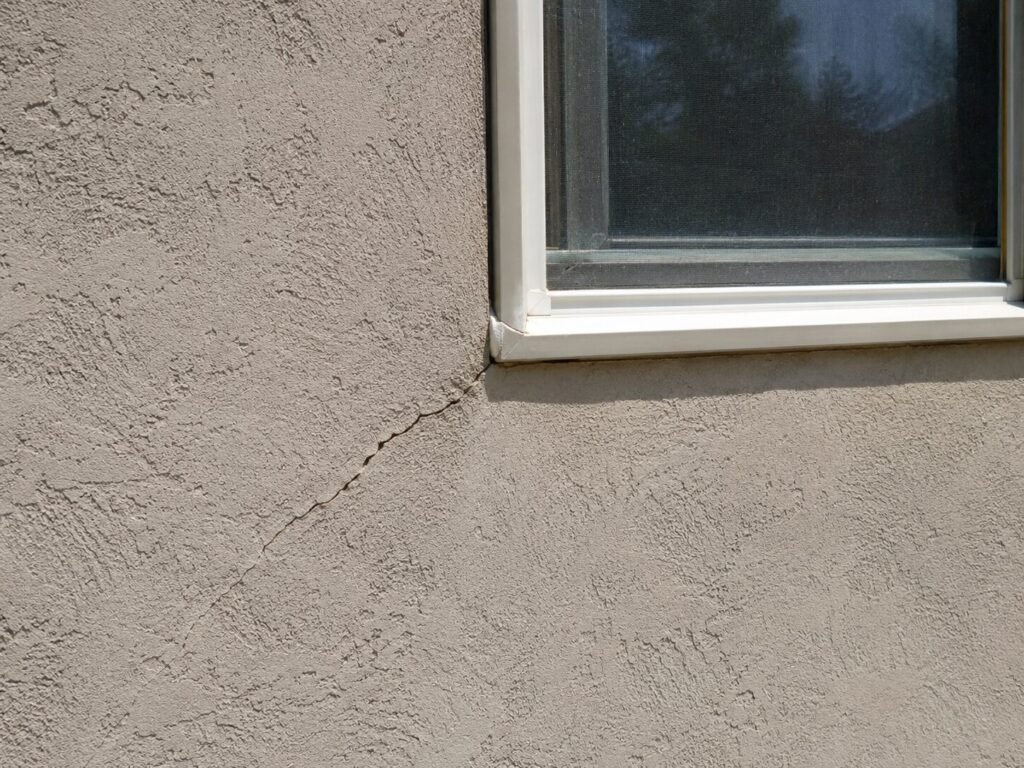
Diagonal cracks at window and door corners
These can indicate stress concentration, missing reinforcement, movement or weak opening details. They deserve closer attention because openings are common water-entry locations.
Horizontal cracks at floor lines
Cracking where floor structure meets wall framing may point to differential movement or a substrate transition.
Vertical cracks at additions or material changes
Different structures and materials move differently. A designed joint may have been omitted, bridged or failed.
Bulges, soft areas or hollow-sounding zones
These symptoms can indicate delamination, wet insulation, failed attachment or deterioration behind the finish. Do not treat them as ordinary cracks.
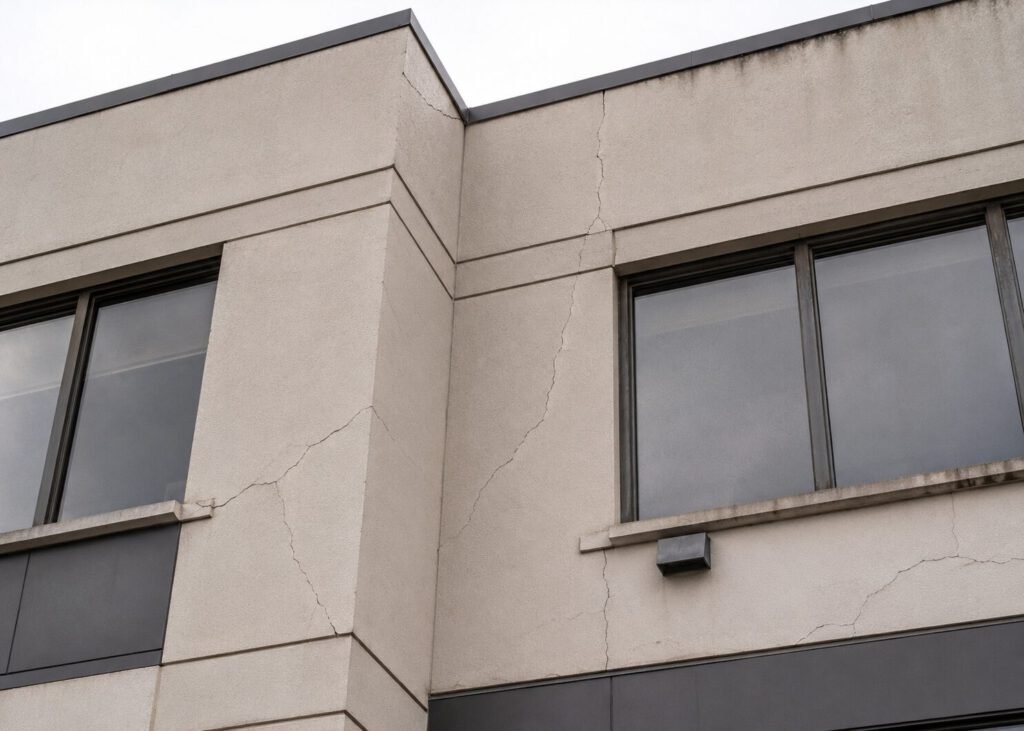
When is a stucco crack urgent?
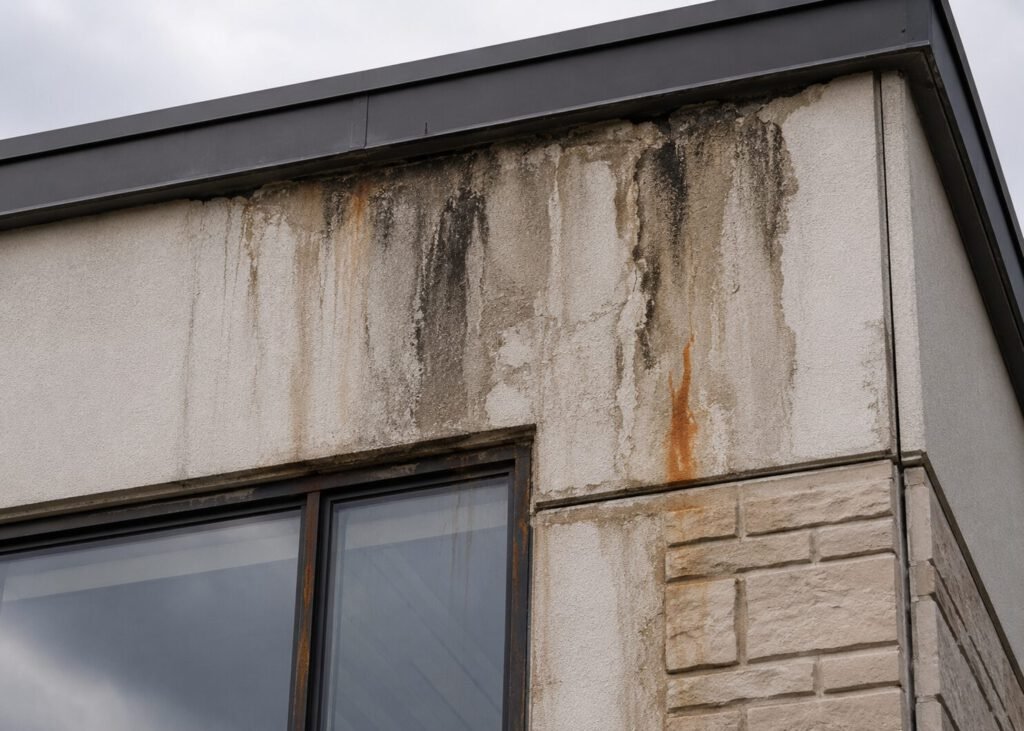
Arrange prompt investigation when a crack:
- is growing or repeatedly returns after repair;
- is accompanied by staining, softness, bulging or mould;
- occurs around a window, roof, deck or penetration with failed sealant;
- exposes insulation, mesh, lath or substrate;
- allows water into the interior;
- appears with displaced cladding or loose material;
- follows impact, structural movement or a significant leak.
Width alone does not determine risk
Location, moisture, depth and movement history are often more important than whether a crack looks dramatic in a photograph.
Can you seal a stucco crack with caulking?
Sealant may be appropriate at designed joints and specific transitions. Smearing generic caulk over a crack in the middle of a wall is rarely a complete repair. It may look poor, trap moisture, interfere with future coatings or fail because the underlying movement continues.
A correct EIFS repair may involve cutting back to sound material, replacing damaged insulation, restoring drainage continuity, embedding compatible reinforcing mesh, applying base coat and matching the finish. Traditional stucco repairs may require lath and multiple cement coats.
How Canadian weather affects existing cracks
Ontario weather acts as an accelerator. Wind-driven rain can enter openings, winter freezing can enlarge wet defects, and strong solar heating can cycle the surface through repeated expansion and contraction. A well-drained wall is more forgiving because incidental water has a route out.
Canadian code guidance distinguishes modern drainage EIFS from older face-sealed assemblies precisely because water that gets behind the exterior needs a controlled escape path. Learn more in our Ontario EIFS weather-performance guide.
Repair, recoat or replace?
Localized repair
Appropriate when damage is limited, surrounding materials are sound and the cause can be corrected.
Repair and full-elevation coating
Useful when local patches are technically sound but colour and texture matching would remain visible.
Partial or full replacement
Necessary when damage is widespread, drainage is fundamentally deficient, attachment has failed or substrate deterioration extends beyond isolated areas.
Our exterior restoration services include investigation, selective openings and repair planning for EIFS and stucco walls.
Frequently asked questions
Stucco crack FAQs
Are hairline stucco cracks normal?
Some fine cracks can result from shrinkage or minor movement. Monitor them and investigate if they grow, recur, stain, remain wet or occur at vulnerable transitions.
Can water get through a small stucco crack?
Yes. Even a small crack can admit water, particularly when exposed to wind-driven rain or connected to a failed joint or flashing detail.
Will freeze-thaw make a crack worse?
It can when water enters and remains in the damaged area. Freezing expansion and repeated cycling may widen the defect or weaken adjacent materials.
Can cracked EIFS be patched?
Often, but the repair should restore compatible insulation, mesh, base coat and finish as required and correct the original cause.
Should I paint over stucco cracks?
Paint may hide fine cosmetic cracking temporarily but will not repair movement, failed reinforcement or moisture damage. Diagnose the crack first.
For a crack assessment or repair scope, contact System 6 with clear photographs and the project location.