PROJECT SPOTLIGHT · COMMERCIAL EXTERIOR RESTORATION · RAMA, ONTARIO
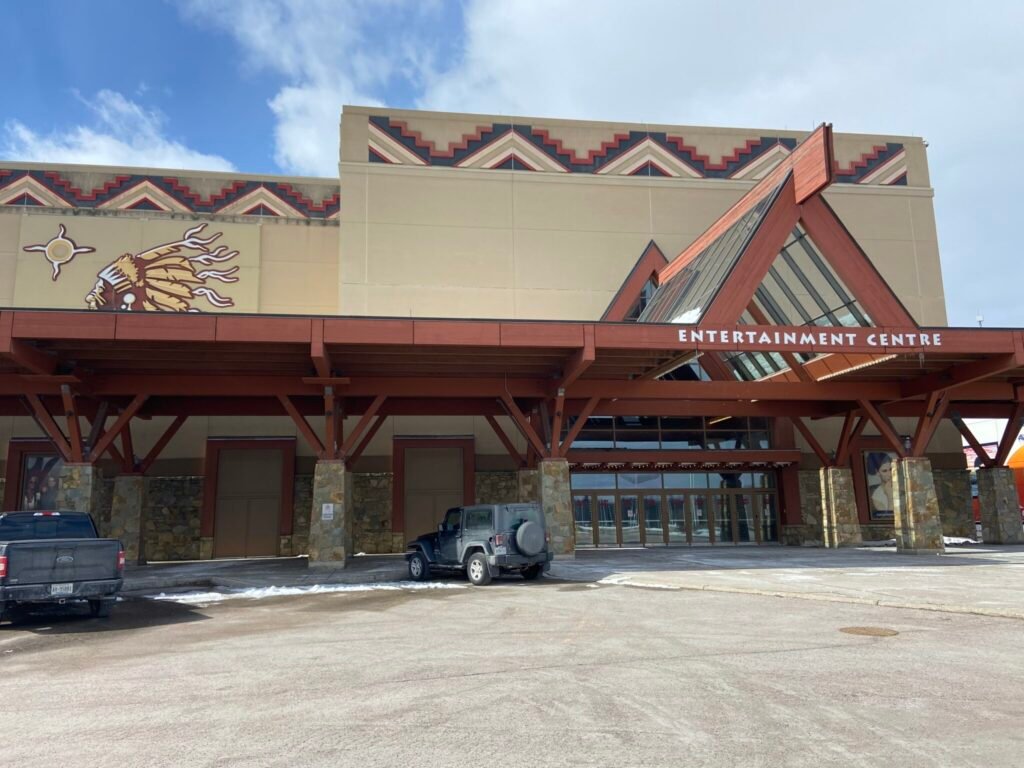
Casino Rama’s large dimensional artwork is woven into the identity of the resort. When hidden water damage left the original exterior assemblies saturated, brittle and at risk of failure, System 6 was brought in to preserve the visible artwork while rebuilding the structure behind it.
Why this was more than a conventional façade repair
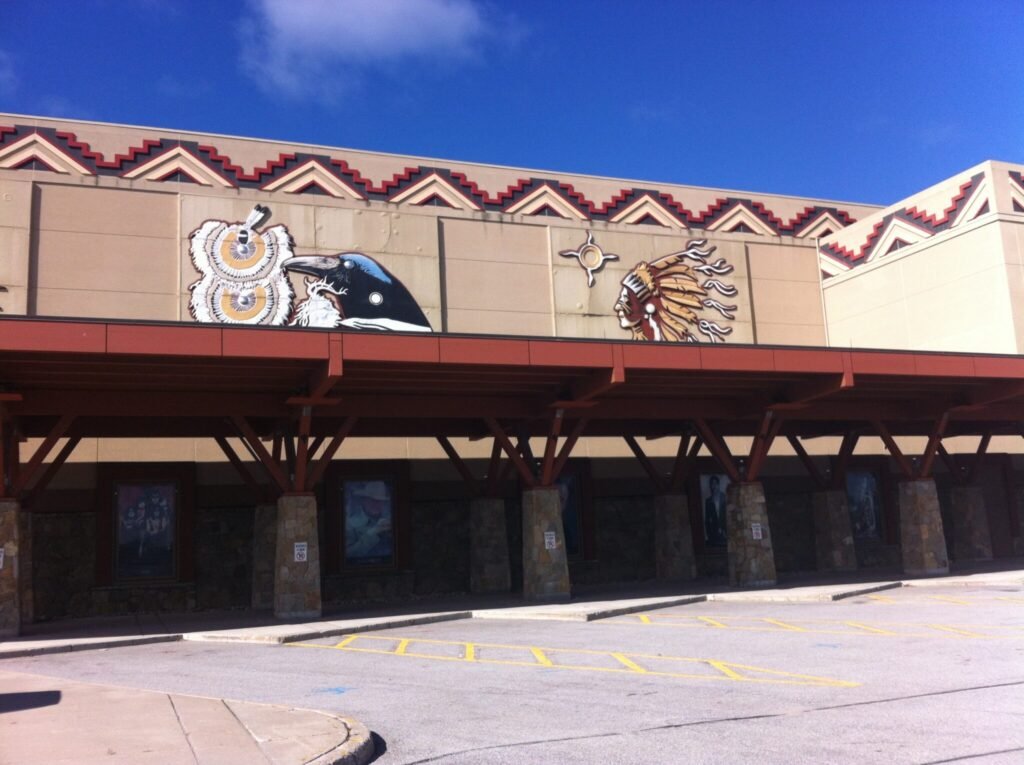
Casino Rama Resort was designed around a blend of First Nation themes, symbols, natural materials and modern architectural details. The exterior artwork was therefore not a decorative afterthought. It formed part of the building’s larger visual and cultural language.
Early reporting about Casino Rama described a major exterior art program involving Rama artists and imagery connected to the seven clan animals. The resort’s designers have also described the property as a celebration of Ojibway culture. That context changed the restoration objective: the work had to solve a serious building-envelope problem without treating the artwork as disposable cladding.
For System 6, the project became a rare combination of commercial exterior restoration, sculptural reconstruction, high-access installation and moisture-damage remediation.
What caused the original exterior artwork assemblies to fail?
The visible artwork remained recognizable, but the assemblies supporting it had deteriorated from prolonged moisture exposure. According to contemporary reporting on the restoration, water had entered virtually every piece. The backing panels were heavily saturated, and parts of the foam had become so brittle that they could break apart with very little force.
This distinction is important on any commercial restoration project: a finish can still look serviceable while the materials behind it are already failing. Moisture can travel through joints, penetrations, failed seals or poorly detailed attachment points and remain hidden for years. Once trapped, it may weaken adhesives, corrode framing, deteriorate sheathing and compromise the bond between layers.
Decorative exterior features are especially vulnerable because they often include complex edges, projections, seams and mounting points. Those details can create more opportunities for water entry than a simple wall plane. A proper assessment must therefore look beyond surface appearance and investigate how the feature is attached, drained and protected from weather.
Removing large architectural artwork safely
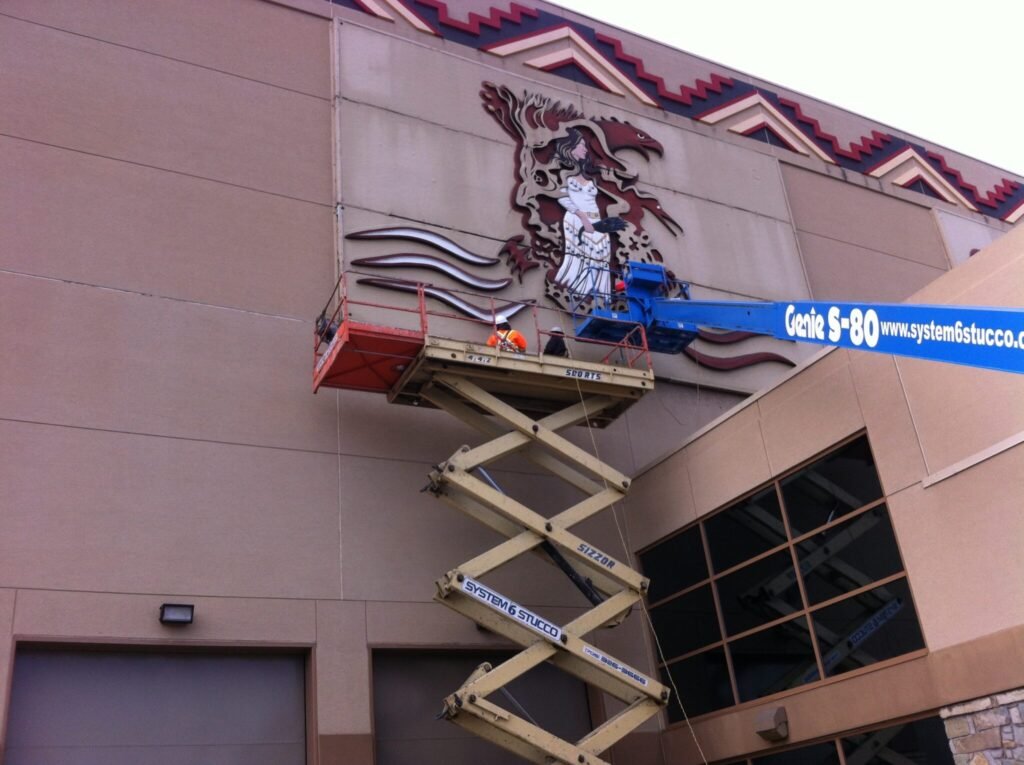
The artwork was mounted high on the building and included large three-dimensional forms extending well beyond the face of the wall. Removal required aerial lifts, controlled access and careful sequencing. The goal was not simply to detach the panels quickly. The crew had to protect the salvageable artwork, avoid damaging the surrounding façade and keep each component organized for reconstruction.
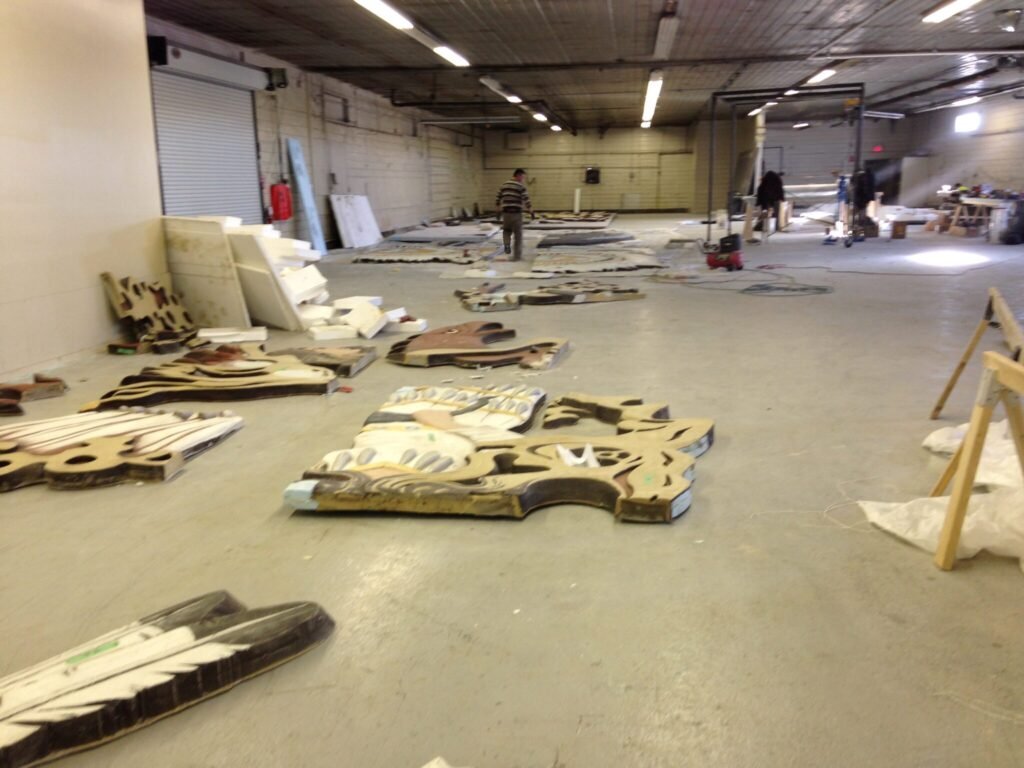
Once removed, the pieces were transported to a rented workshop where the restoration team could work at floor level. Moving the project indoors created the space needed to inspect each component, separate artistic pieces from failed backing material and rebuild the panels under controlled conditions.
Preserving the artwork while discarding failed materials
The original backing structures could not simply be dried and reused. They were too saturated and too deteriorated to provide a reliable base for reinstallation. System 6 removed and discarded the failed panel structures while preserving the recognizable artistic elements that could be incorporated into the new assemblies.
This selective approach is often the difference between restoration and reproduction. Rather than replacing everything with a simplified new design, the team retained the original dimensional character wherever practical. Fragile foam was carved away, damaged areas were rebuilt and surviving artistic pieces were cleaned, repaired and prepared for attachment to the reconstructed panels.
The work demanded patience. Large forms such as wings, masks, figures and flowing decorative lines had to align across multiple sections. Small dimensional errors would become obvious once the pieces were reassembled on panels measuring approximately nine by twenty feet.
How System 6 rebuilt the structural panels
The replacement assemblies were not built as lightweight props. They were designed as exterior architectural panels capable of supporting the restored artwork and resisting weather exposure.
System 6 created new foam-core forms and embedded metal studs directly into the foam to provide structural reinforcement. The panels were then wrapped in reinforced base-coat layers using methods related to modern EIFS and stucco systems. Mesh reinforcement helped distribute stresses across the surface, while multiple base-coat applications created a durable exterior skin.
The salvaged artistic elements were epoxied onto the newly constructed panels. This allowed the restoration team to preserve the original appearance while giving the artwork a completely new supporting structure.
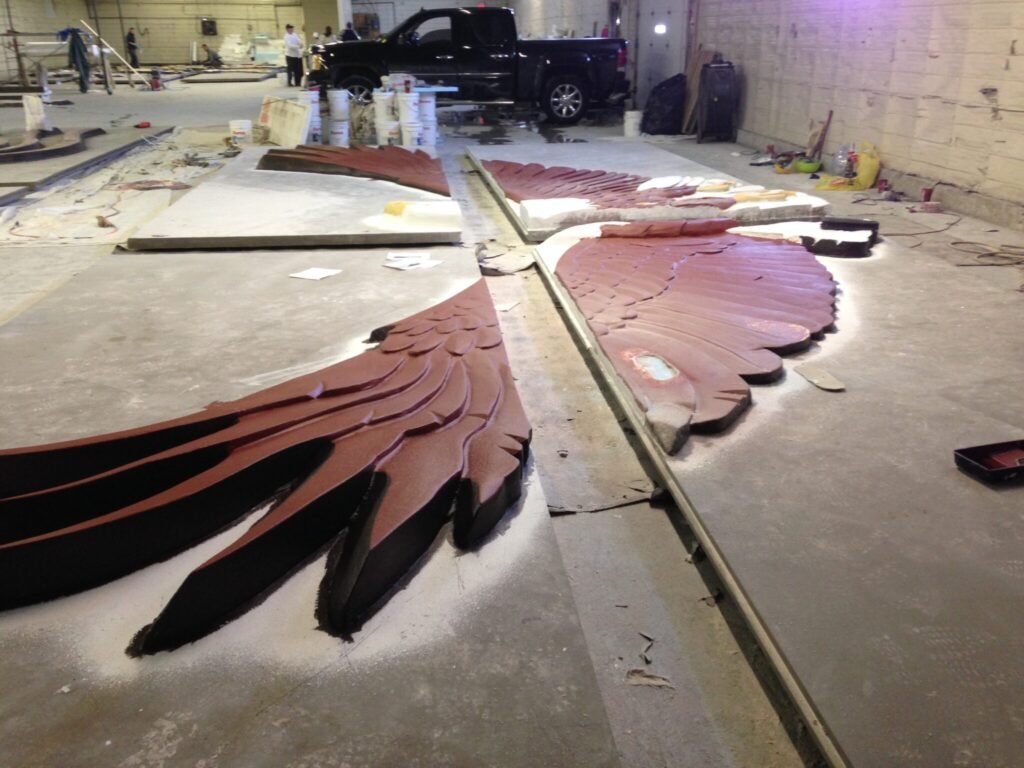
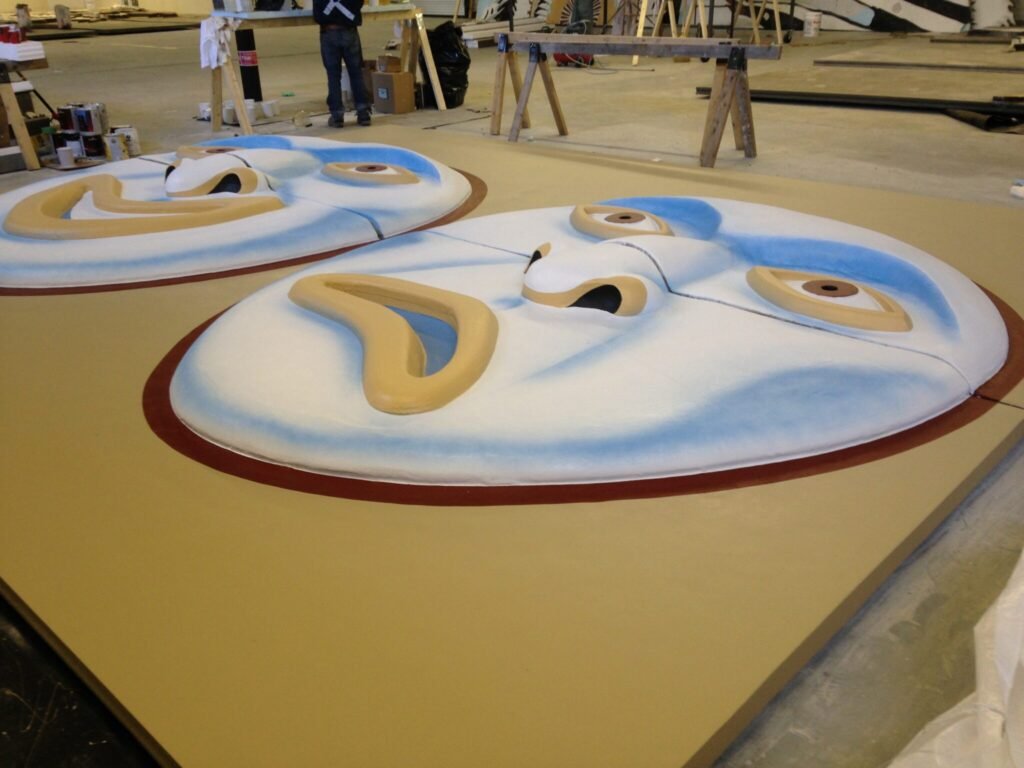
The project was essentially a wall reconstruction, sculpture restoration and high-access installation combined into one scope.
Why EIFS restoration methods were well suited to the work
Exterior Insulation and Finish Systems are often associated with insulated building walls, but many of the same materials and techniques are useful for architectural shapes and dimensional façade elements. Foam can be cut and shaped accurately, reinforced base coats can form a continuous protective layer, and finish materials can be selected to reproduce detailed colour and texture.
That flexibility made EIFS-based methods a practical choice for rebuilding the artwork’s complex forms. The system could accommodate curved profiles, layered projections and intricate edges while remaining far lighter than comparable solid masonry or precast construction.
Light weight alone, however, does not make an exterior assembly durable. Long-term performance depends on proper reinforcement, secure attachment, compatible coatings, sealed transitions and thoughtful moisture management. Those details matter on every specialized façade restoration, whether the project involves artwork, cornices, mouldings, wall panels or conventional EIFS.
Restoring colour, contours and dimensional details
Structural rebuilding solved only half the problem. The restored panels still had to look like the artwork visitors recognized. The workshop photos show the scale of that effort: carved foam transitions, layered feathers, large masks, raised outlines and complex painted surfaces spread across the floor.
Damaged contours were reshaped, missing sections were reconstructed and surfaces were prepared for refinishing. The final coating work had to respect the original colour relationships while providing a finish suitable for exterior exposure. This stage drew on the same surface-preparation and coating knowledge System 6 applies to architectural coating projects.
Because the artwork was viewed from a distance, large shapes and colour boundaries had to read clearly from the ground. At the same time, close-up details could not look crude once the panels were back on the building. The successful result depended on balancing both scales.
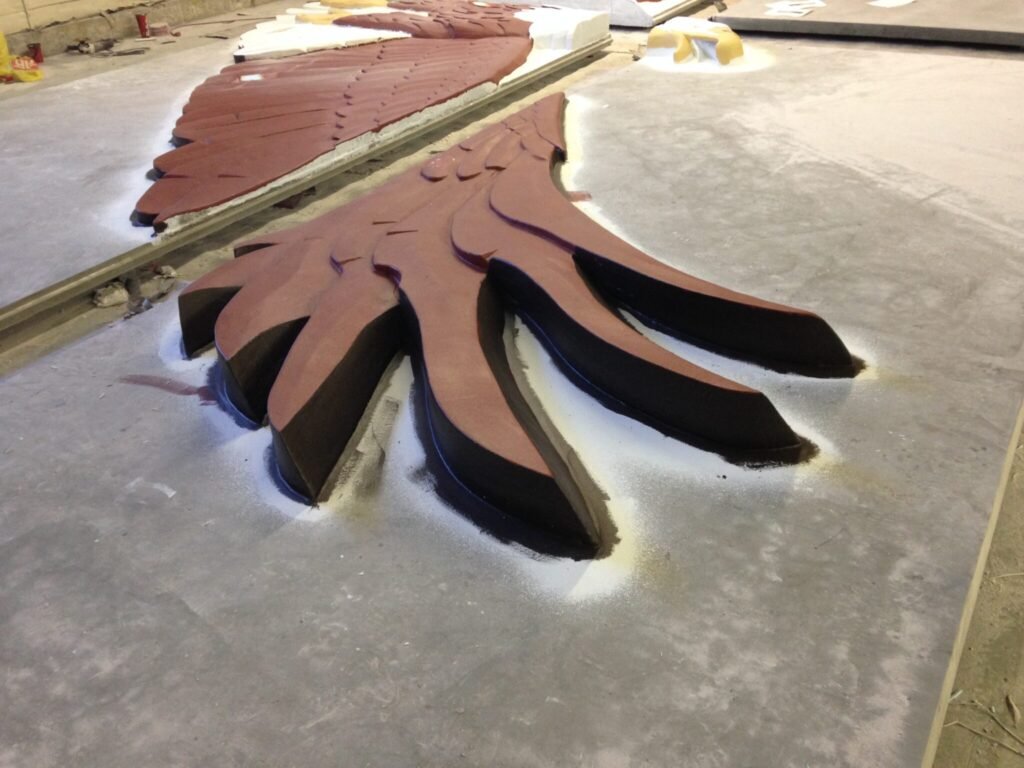
Reinstalling the restored artwork at Casino Rama
After reconstruction and refinishing, the completed assemblies were transported back to Casino Rama and lifted into position. Reinstallation required careful alignment between adjacent panels, secure structural attachment and coordination around the existing building geometry.
The completed work returned a defining group of exterior features to the property while resolving the hidden failures that had threatened them. The visible artwork remained familiar, but the structures behind it were fundamentally different: reinforced, rebuilt and designed for exterior service.
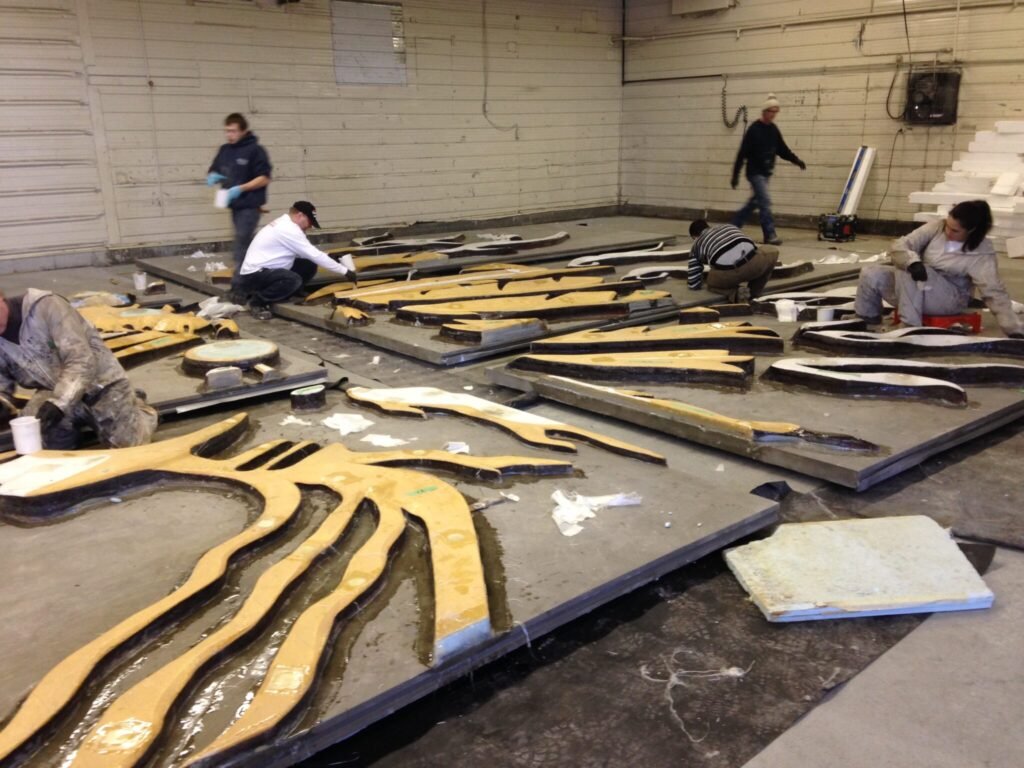
What commercial property owners can learn from this project
Casino Rama’s exterior artwork was unusual, but the underlying lesson applies to many commercial buildings. Architectural features can conceal serious moisture damage long before failure becomes visible from the ground.
- Inspect projections and attachment points. Decorative bands, mouldings, signs, artwork and panel joints can concentrate water entry.
- Do not rely on appearance alone. A surface may look intact while backing materials, fasteners or framing are deteriorating.
- Investigate recurring staining or cracking. These symptoms may indicate movement or moisture within the assembly rather than a cosmetic coating issue.
- Preserve only what can be supported safely. Restoration plans should distinguish salvageable finish elements from failed structural materials.
- Design the replacement assembly for drainage and exposure. Recreating the original failure-prone detail is not restoration. It is postponement with an invoice.
System 6 evaluates the full condition of an exterior assembly before recommending repair, reconstruction or replacement. That approach helps property owners address the actual source of deterioration instead of repeatedly treating visible symptoms.
Frequently asked questions about exterior artwork restoration
Can water-damaged exterior artwork be restored?
Often, yes. The feasibility depends on which materials are damaged and whether the visible artistic elements can be separated from the failed structure. In the Casino Rama project, the original backing assemblies were discarded while salvageable artwork was repaired and incorporated into new reinforced panels.
Can architectural foam panels be rebuilt?
Architectural foam elements can be reshaped, reinforced and coated when the restoration is engineered around their size, exposure and attachment requirements. Large panels may require embedded framing, reinforced mesh, multiple base coats and purpose-built mounting details.
What causes decorative exterior panels to fail?
Common causes include water entry at joints or fasteners, failed sealants, inadequate drainage, incompatible materials, corrosion, freeze-thaw cycling and movement between the panel and supporting wall. A condition assessment should identify the source before repairs begin.
Is this type of work the same as normal EIFS repair?
It uses related materials and skills, but the scope can be much more specialized. Architectural artwork restoration may involve sculpture, custom fabrication, structural reinforcement, colour matching, high-access removal and reinstallation in addition to conventional EIFS repair techniques.
Does System 6 provide commercial exterior restoration in Ontario?
Yes. System 6 provides commercial exterior restoration, EIFS and stucco repair, architectural coatings, sealant work and specialized façade solutions across Ontario. Project requirements vary, so the first step is a site review and assessment of the existing assembly.
SPECIALIZED EXTERIOR RESTORATION
When the exterior is complicated, the repair strategy should be specific
From large architectural features and water-damaged EIFS assemblies to coatings, sealants and complete façade reconstruction, System 6 develops restoration scopes around the actual building conditions.
Explore exterior restoration services
Request a project assessment
Project and historical context
This article draws on System 6 project records and photographs, contemporary local reporting supplied by System 6, information published by the Chippewas of Rama First Nation, and architectural background from Casino Rama’s design team.